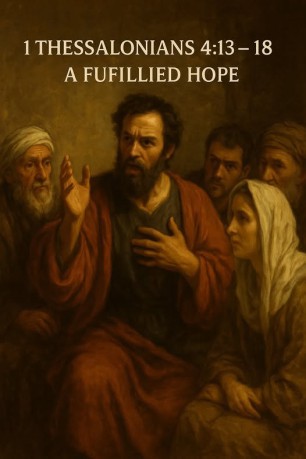
1
Thessalonians 4:13–18 – A Fulfilled Hope
Text:
1 Thessalonians 4:13–18 (NASB)
Brothers and sisters, I want to speak plainly about a passage that
has often been misunderstood, especially by futurists, and sometimes
even by Preterists who have not taken the time to carefully walk
through it. I'm talking about 1 Thessalonians 4:13–18. Many say it
teaches a future rapture, a global resurrection event, or a literal
flying away. But if we simply read the text in context and through
first-century eyes, we find something far more grounded, beautiful,
and fulfilled. Let's take it verse by verse: 1. The Dead Are Not
Forgotten
1 Thessalonians 4:13
"But
we do not want you to be uninformed, brothers and sisters, about
those who are asleep, so that you will not grieve, as indeed the
rest of mankind do, who have no hope." Paul is writing to comfort believers in Thessalonica who were
grieving over the deaths of fellow Christians. Their concern was that the dead
would miss out on the coming of the Lord. Paul is not addressing the end of the universe but their
local sorrow, assuring them their loved ones were not forgotten. 2. God Will Bring Them With
Him (not us, them)
1 Thessalonians 4:14
"For
if we believe that Jesus died and rose from the dead, so also God
will bring with Him those who have fallen asleep through Jesus." Just as Jesus rose from the dead, God would raise up those
believers who had died. This was about inclusion in the
promises of the kingdom. It was not about graveyards being emptied, but about the
faithful dead receiving what had been promised. What does "bring with Him" mean? God would raise the faithful dead
and bring them into the heavenly realm, into the body of Christ,
the New Covenant kingdom. They were not just resurrected
spiritually but also brought into Heaven, into the heavenly
Jerusalem (Hebrews 12:22-24). Their inclusion was not a delay or future hope, it was a
first-century fulfilled reality. Don't let futurists twist this verse
to say Jesus is bringing saints with Him from Heaven back to Earth.
Verse 16 plainly says the Lord comes Himself, it
doesn't say He's bringing anyone with Him. The point is that God is
including the dead in Christ in the promise, not physically
escorting them down. 3. The Living Would Not
Precede the Dead
1 Thessalonians 4:15
"For
we say this to you by the word of the Lord, that we who are alive,
who remain until the coming of the Lord, will not precede those who
have fallen asleep." Paul includes himself in "we who are alive." He believed this event was
imminent, not thousands of years away. The coming of the Lord (parousia)
was expected in their lifetime. The dead would be raised first, then the living would join
in the fulfillment. 4. The Dead in Christ Will
Rise First
1 Thessalonians 4:16
"For
the Lord Himself will descend from heaven with a shout, with the
voice of the archangel and with the trumpet of God, and the dead in
Christ will rise first." This is symbolic language. "Descend from heaven"
reflects divine judgment and intervention (Isaiah 64:1, Micah 1:3). "Trumpet" and "shout" echo Exodus 19 and
Joel 2, judgment imagery. Although the word "resurrection"
is not used here, the phrase "the dead in Christ will rise"
clearly points to it. It describes those who had fallen asleep
(verse 13) now being raised up to share in the promise of Christ's
coming. This rising is the same event Paul spoke of elsewhere using
resurrection language (e.g., 1 Corinthians 15, Philippians 3:11). This was not a physical rising of
bodies from graves, but a spiritual resurrection, a covenantal
raising of the faithful dead into the heavenly kingdom. It is
consistent with Daniel 12:2 and Hebrews 11:39–40. This marked the
full transition out of the Old Covenant age and the uniting of all
the saints in the fulfilled New Covenant kingdom. 5. Gathering in the Clouds
1
Thessalonians 4:17
"Then we who are alive, who
remain, will be caught up together with them in the clouds to meet
the Lord in the air, and so we will always be with the Lord." The Greek word "caught up" (harpazo) means to be seized
or snatched not lifted into the sky. "Clouds" represent
God's presence and glory (Isaiah 19:1, Matthew 24:30). "Meet the Lord" (Greek: apantesis) refers to going
out to meet a dignitary and escorting him back. This was not a flight away to
heaven but rather the moment when the saints, both dead and living,
were gathered into the fully revealed heavenly kingdom. The
destination was indeed Heaven, but not by flying upward. It was a
spiritual transfer into the eternal New Covenant reality. This is where the living believers
entered the completed body of Christ, the New Jerusalem. They were
spiritually joined into Him, caught up into His presence, not by
being relocated, but by being included in what Hebrews 12:22 calls
'Mount Zion... the city of the living God, the heavenly Jerusalem.'
This is the same heavenly dwelling Paul described in Ephesians
2:21-22, and the same city John saw descending in Revelation 21:2-3.
They were not caught up physically, but were spiritually joined into
Christ, entering the fully revealed body of Christ, the New
Jerusalem. This was their union with the raised saints and with
Christ Himself, forming the perfected temple and dwelling of God
(Ephesians 2:21-22, Revelation 21:2-3). 6. The True Comfort
1
Thessalonians 4:18
"Therefore, comfort one
another with these words." Then (Before AD 70):
The
Thessalonians were grieving the deaths of their fellow believers.
Paul assured them that the faithful dead would not miss out, they
would rise and be included in the coming glory. The living would
join them. This was comfort in the face of persecution, waiting for
imminent vindication. They were comforted knowing: The Lord's return was soon The dead would be raised They would all be united in
Christ The Old Covenant was ending, and the kingdom was arriving Now (2025):
We
are not waiting for fulfillment, we are living in it. The
resurrection has happened. The kingdom is here. We are part of the
body of Christ, the New Jerusalem. We don't look for future signs,
we rest in His completed work. We are comforted knowing: Christ kept His promise Death has no dominion over the
faithful The saints are gathered, alive in
Him We are citizens of the heavenly kingdom now The goal of this passage was comfort, not fear. The Thessalonians were being
assured that their loved ones were not forgotten. The living and the dead in Christ would both be vindicated
and included in the eternal kingdom that was being fully revealed. Conclusion Paul was not speaking to us,
2,000 years later. He was writing to them, the Thessalonian
believers, who were awaiting the fulfillment of Christ's promises. The trumpet, the clouds, the
resurrection, all of it was tied to covenantal language, not global
cosmic destruction. This is the same language Jesus
used in Matthew 24:30-34, where He said these things would happen
within that generation. The Lord's coming was not delayed, it was fulfilled. He came
in judgment on the Old Covenant system, vindicated His people, and
fully established the New Covenant. Revelation 22:12 confirms
this:
"Behold, I am coming quickly, and My reward is with
Me, to reward each one as his work deserves." Friends, if this doesn't read the way
it has been traditionally taught, it's because most have been
trained to read it through a futurist lens. But when we step back
and read it as Paul's first-century audience would have, everything
falls into place. Christ kept His word. The dead were
raised. The kingdom is here. And we are living in the age of its
fullness.
By Dan Maines
Links