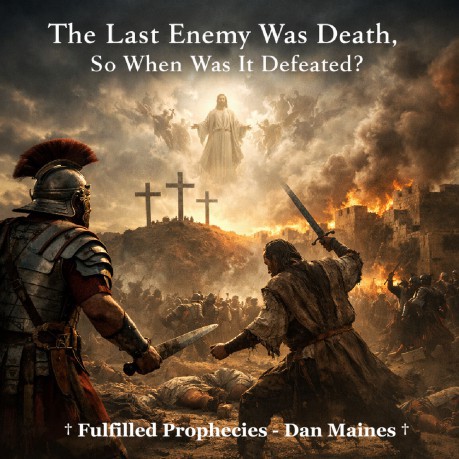
The Last Enemy Was Death, So
When Was It Defeated? Introduction † Most people assume death is still reigning
today, but Scripture says something very different. (1 Corinthians
15:26) † If death was the last enemy to be destroyed,
then we have to ask a simple question, when did that actually happen?
(1 Corinthians 15:24-26) † This isn't a future hope waiting to happen,
this is something Scripture places within the lifetime of that
generation. (Matthew 16:27-28) † If we get this wrong, we end up pushing the
resurrection into the future when the Bible says it was already
fulfilled. (Hebrews 2:14) 1 Corinthians 15:24-26 then comes the end, when He hands over the kingdom to our God and
Father, when He has abolished all rule and all authority and power.
For He must reign until He has put all His enemies under His feet.
The last enemy that will be abolished is death. † Paul says the end comes when all enemies are
put under His feet, and death is the last one. (1 Corinthians
15:24-26) † That means when death is defeated, the end
has already come, not thousands of years later. (1 Corinthians 15:24) † If death is the last enemy, then nothing
comes after it, the kingdom is fully established at that point. (1
Corinthians 15:25-26) † So the real question is, when did Christ
destroy death? (1 Corinthians 15:26) 1 Corinthians 15:56 The sting of death is sin, and the power of sin is the Law; † Death gets its power from sin, and sin gets
its power from the law. (1 Corinthians 15:56) † That means death is directly tied to the old
covenant system, not just physical dying. (1 Corinthians 15:56) † When the law was removed, the power behind
sin and death was removed with it. (1 Corinthians 15:56) † This places the defeat of death at the end of
the old covenant age, not at the end of world history. (1 Corinthians
10:11) Matthew 16:27-28 For the Son of Man is going to come in the glory of His Father
with His angels, and WILL THEN REPAY EVERY PERSON ACCORDING TO HIS
DEEDS. Truly I say to you, there are some of those who are standing
here who will not taste death until they see the Son of Man coming in
His kingdom. † Jesus places His coming and judgment within
the lifetime of His audience. (Matthew 16:27-28) † Some standing there would still be alive when
this happened, so this cannot be a future event thousands of years
later. (Matthew 16:28) † This is the same coming connected to the
resurrection and the end in 1 Corinthians 15. (1 Corinthians
15:23-24) † That means the defeat of death had to happen
in that same time frame. (Matthew 16:27-28) Hebrews 2:14 Therefore, since the children share in flesh and blood, He Himself
likewise also partook of the same, so that through death He might
destroy the one who has the power of death, that is, the devil, † Christ's purpose in His death was to destroy
the one who had the power of death. (Hebrews 2:14) † This isn't partial, it says bring to nothing,
meaning complete defeat. (Hebrews 2:14) † If the devil's power over death is destroyed,
then death itself has been defeated. (Hebrews 2:14) † That destruction includes removing his
authority as the accuser under the law. (Revelation 12:10) † This lines up perfectly with 1 Corinthians
15, death is not waiting to be destroyed, it was destroyed. (1
Corinthians 15:26) Romans 7:9-11 I was once alive apart from the Law, but when the commandment
came, sin came to life, and I died; and this commandment, which was
to result in life, proved to result in death for me; for sin, taking
an opportunity through the commandment, deceived me, and through it,
killed me. † Paul directly connects death to the
commandment, showing death is covenantal in nature. (Romans 7:9-11) † The law brought sin to life, and sin brought
death, this is not physical death but separation under the covenant.
(Romans 7:9-11) † Once the law passed away, the source of that
death was removed. (Romans 7:6) † This confirms that the defeat of death is
tied to the end of the law, not the end of the physical world. (1
Corinthians 15:56) Revelation 20:14 Then death and Hades were thrown into the lake of fire. This is
the second death, the lake of fire. † Death itself is destroyed, not managed, not
delayed, but cast away completely. (Revelation 20:14) † This is the same final enemy Paul spoke of,
now shown as fully removed. (1 Corinthians 15:26) † This takes place in the same judgment context
tied to that generation. (Revelation 1:1) † Death is not an ongoing enemy today, it was
dealt with in that judgment. (Revelation 20:14) Historical References † Josephus records the complete collapse of
Jerusalem in AD 70, the end of the old covenant system tied to death
and condemnation. (Josephus, Wars of the Jews, Book 6) † Eusebius confirms that Christians understood
Jesus' words about that generation and saw their fulfillment in the
destruction of Jerusalem. (Eusebius, Ecclesiastical History 3.5) † Irenaeus ties the defeat of death directly to
Christ's completed work, not an unfinished future event. (Irenaeus,
Against Heresies 5.15) † Tacitus records the devastation of Jerusalem,
aligning with the judgment Jesus spoke of in that generation.
(Tacitus, Histories 5.13) How It Applies To Us Today † We're not waiting for death to be defeated,
we're living in the reality that it already has been. (1 Corinthians
15:26) † Spiritual death has no power over those in
Christ, because He already destroyed it. (Hebrews 2:14) † The kingdom is not coming, it's already
established and we are part of it now. (Luke 17:20-21) † Our hope isn't future resurrection, it's
present life in Christ, because the resurrection has already been
fulfilled. (1 Corinthians 15:54) Q & A Appendix Q If death was defeated, why do people still
physically die? Q When exactly was death defeated? Q Does this mean the resurrection already
happened? Q Is there any future defeat of death coming? Q Why do we still see sin and corruption if death
was defeated? Q Does Revelation 20 place the defeat of death in
the future? Q Is physical death ever said to be abolished in
Scripture? Q What changed after death was defeated? † This is the fulfilled perspective we proclaim at
Fulfilled Prophecies † Source Index † 1 Corinthians 15:24-26; 1 Corinthians 15:56;
Matthew 16:27-28; Hebrews 2:14; Romans 7:9-11; Romans 7:6; Revelation
20:14; Revelation 1:1; Revelation 12:10; Luke 17:20-21; 1 Corinthians
15:54; Ephesians 2:1; Romans 5:12; John 5:24-25; Matthew 24:34;
Romans 6:7; Romans 8:2; Hebrews 10:19-20; Ephesians 2:13 † Josephus, Wars of the Jews, Book 6; Eusebius,
Ecclesiastical History 3.5; Irenaeus, Against Heresies 5.15; Tacitus,
Histories 5.13
By Dan Maines
A The death in view is
covenantal and spiritual death, separation from God, not physical
death. Ephesians 2:1; Romans 5:12
A
Within that generation when Christ came in judgment, just as He said.
Matthew 16:27-28; Matthew 24:34
A Yes, the resurrection was the
transition from the old covenant death to new covenant life. 1
Corinthians 15:44-46; John 5:24-25
A
No, Scripture says death was the last enemy, once it was defeated,
nothing remains. 1 Corinthians 15:26
A Because the defeat of death
removed separation from God, not human free will or physical decay.
Romans 6:7; Romans 8:2
A No, Revelation was written about
things which must soon take place. Revelation 1:1; Revelation 20:14
A No, Scripture consistently
connects death to sin and the law, not biology. 1 Corinthians 15:56;
Romans 7:9-11
A
Full access to God without the law standing in between, no more
separation. Hebrews 10:19-20; Ephesians 2:13
© Fulfilled Prophecies - Dan
Maines.
Links