Acts 19 Paraphrased Introduction Acts 19:1 Acts 19:2 Acts 19:3 Acts 19:4 Acts 19:5 Acts 19:6 Acts 19:7 Acts 19:8 Acts 19:9 Acts 19:10 Acts 19:11 Acts 19:12 Acts 19:13 Acts 19:14 Acts 19:15 Acts 19:16 Acts 19:17 Acts 19:18 Acts 19:19 Acts 19:20 Acts 19:21 Acts 19:22 Acts 19:23 Acts 19:24 Acts 19:25 Acts 19:26 Acts 19:27 Acts 19:28 Acts 19:29 Acts 19:30 Acts 19:31 Acts 19:32 Acts 19:33 Acts 19:34 Acts 19:35 Acts 19:36 Acts 19:37 Acts 19:38 Acts 19:39 Acts 19:40 Acts 19:41 Historical References How It Applies To Us Today Q & A Appendix † This is the fulfilled perspective we proclaim at
Fulfilled Prophecies † Source Index
By Dan Maines
† This
chapter shows the power of the gospel confronting false religion and
empty ritual
† It reveals the transition from
partial understanding to full truth in Christ
†
It also shows how the kingdom of God overturns idolatry and man-made
systems
While Apollos was in Corinth, Paul
traveled through the inland regions and came to Ephesus, where he
found some disciples
† These were believers
with incomplete understanding, showing the transition period of the
covenant (Acts 18:24-26)
† The gospel was
still spreading outward into the nations as promised (Isaiah 49:6)
He asked them if they had received
the Holy Spirit when they believed, and they said they had not even
heard there was a Holy Spirit
† This shows
their limited knowledge under John's message, not the full gospel
†
The Spirit marks the fulfillment of the new covenant promise (Ezekiel
36:26-27)
Paul asked what baptism they had
received, and they said John's baptism
†
John's baptism pointed forward, but it was not the completed work of
Christ
† It was preparatory, not the final
covenant reality (Matthew 3:11)
Paul explained that John baptized
with a baptism of repentance, telling people to believe in the one
coming after him, that is Jesus
† John was
pointing to Christ, not establishing a final system
†
The fulfillment is always found in Christ, not the shadow (Colossians
2:17)
When they heard this, they were
baptized in the name of the Lord Jesus
† This
marks their transition into the completed covenant reality
†
The name of Jesus represents authority and fulfillment (Acts 4:12)
When Paul laid hands on them, the
Holy Spirit came on them, and they spoke in tongues and prophesied
†
These signs confirmed the gospel during its expansion phase
†
This was a transitional confirmation, not a permanent requirement
(Hebrews 2:3-4)
There were about twelve men in
all
† A small group, yet representing the
spread of truth into the Gentile world
† God
often begins with a remnant to establish His work (Isaiah 10:22)
Paul entered the synagogue and
spoke boldly for three months, reasoning and persuading them about
the kingdom of God
† The message centered on
the kingdom already being established
† The
kingdom was not future but present in Christ's reign (Matthew 12:28)
Some became hardened and refused
to believe, speaking evil of the Way, so Paul withdrew and taught
daily in the lecture hall of Tyrannus
†
Rejection from Israel led to further outreach to the nations
†
This fulfills the shift of the kingdom being taken and given to
others (Matthew 21:43)
This continued for two years, so
all who lived in Asia heard the word of the Lord, both Jews and
Greeks
† The gospel spread rapidly across the
known world
† This fulfills the promise that
the message would go to all nations (Colossians 1:23)
God was performing extraordinary
miracles by the hands of Paul
† These signs
validated the apostolic message during the transition
†
They confirmed divine authority, not human ability
Even handkerchiefs and aprons
carried from Paul healed the sick and drove out evil spirits
†
The power was from God, not the objects themselves
†
This demonstrated the authority of Christ over sickness and darkness
Some Jewish exorcists tried to
invoke the name of Jesus over those with evil spirits, saying they
commanded them by Jesus whom Paul preached
†
They attempted to use the name without true faith
†
This shows the difference between knowing about Christ and knowing
Him
Seven sons of a Jewish chief
priest named Sceva were doing this
†
Religious status does not equal spiritual authority
†
Titles cannot replace true relationship with Christ
The evil spirit answered them,
saying it knew Jesus and Paul, but not them
†
Authority is recognized in the spiritual realm when it is genuine
†
Empty religion has no power against darkness
The man with the evil spirit
overpowered them, and they fled wounded and naked
†
This exposed their lack of real authority
†
It showed the danger of false spiritual claims
This became known to all in
Ephesus, and fear fell on them, and the name of the Lord Jesus was
magnified
† God used this event to bring
reverence and truth
† The name of Jesus was
exalted above all others
Many who believed came confessing
and revealing their practices
† True faith
leads to repentance and openness
† The gospel
produces real transformation
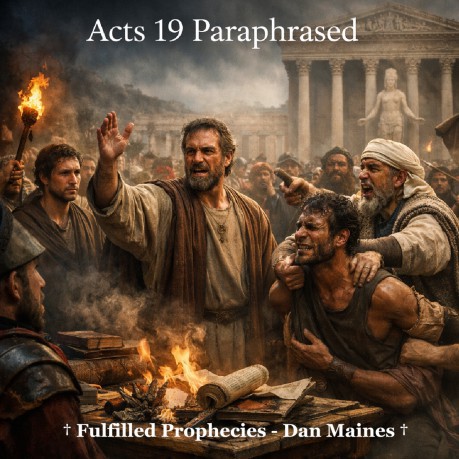
Many who practiced magic brought
their books and burned them publicly, and the value was very high
†
This shows a complete break from the old life
†
True repentance costs something and is visible
The word of the Lord was growing
mightily and prevailing
† The gospel was
overcoming false systems and beliefs
† Truth
always prevails over deception
Paul planned to go to Jerusalem
after passing through Macedonia and Achaia, saying he must also see
Rome
† The gospel was moving toward the
center of the empire
† This aligns with God's
plan to reach all nations
He sent Timothy and Erastus
ahead, while he stayed in Asia for a time
†
Ministry involved teamwork and preparation
†
The mission was structured and intentional
At that time there was a major
disturbance concerning the Way
† The gospel
often disrupts economic and religious systems
†
Truth challenges established traditions
A silversmith named Demetrius
made shrines of Artemis and brought profit to craftsmen
†
Idolatry was tied to financial gain
† False
religion often depends on economic systems
He gathered the workers and said
their prosperity depended on this business
†
Their concern was profit, not truth
† This
reveals the motive behind opposition
He said Paul was persuading many
that gods made with hands are not gods
† The
gospel exposed the emptiness of idols
† This
echoes the truth declared in the prophets (Isaiah 44:9-10)
He warned that their trade and
the temple of Artemis were in danger of being discredited
†
Truth threatens systems built on deception
†
Idolatry cannot stand against the living God
When they heard this, they were
filled with rage and cried out in defense of Artemis
†
False religion reacts emotionally when exposed
†
Anger often replaces reason when truth is rejected
The whole city was thrown into
confusion and rushed into the theater
† Chaos
followed the challenge to their beliefs
†
This shows how deeply rooted idolatry was
Paul wanted to go in, but the
disciples would not let him
† Wisdom
sometimes restrains bold action
† Protection
is also part of God's provision
Some officials who were friends
of Paul warned him not to enter
† God used
unexpected people to protect His servant
†
Influence reached even into government circles
The assembly was in confusion,
many not even knowing why they were there
†
Mob mentality often lacks understanding
†
This shows the irrational nature of opposition
They pushed Alexander forward,
and he tried to make a defense
† Leaders
attempted to control the situation
† But
truth was not the focus of the crowd
When they realized he was a Jew,
they shouted for hours in defense of Artemis
†
Identity triggered further rejection
† This
shows deep hostility toward the truth
The town clerk quieted the crowd,
reminding them of their city's reputation
†
Order was restored through reason and authority
†
God used civil structure to calm chaos
He told them there was no need
for such disorder
† The situation was
unnecessary and excessive
† Truth does not
require violent defense
He said the men had not robbed
temples or blasphemed their goddess
† The
accusations were unfounded
† The gospel does
not operate through destruction
He advised legal channels if
there were complaints
† Proper order should
be followed
† Justice must be handled
lawfully
Any further issues should be
settled in lawful assembly
† This prevented
escalation
† Structure maintains peace
He warned they were in danger of
being charged with rioting
† Their actions
had real consequences
† Disorder leads to
accountability
After saying this, he dismissed
the assembly
† The conflict ended without
harm to Paul
† God preserved His mission
despite opposition
†
Josephus describes the widespread influence of magic and superstition
in the ancient world, Antiquities Book 8
†
Eusebius records the spread of the gospel overcoming pagan systems,
Ecclesiastical History
† Clement of
Alexandria writes about the abandonment of pagan practices through
the gospel, Stromata
†
True faith requires leaving behind old beliefs and practices
†
The gospel still confronts modern forms of idolatry
†
We must rely on Christ's authority, not empty religion
†
Truth will always disrupt systems built on deception
†
Repentance must be real, visible, and complete
Q Why
were these disciples missing the Holy Spirit?
A
They only knew John's message, not the completed work of Christ (Acts
19:2-4)
Q Why did the sons of Sceva fail?
A
They used the name of Jesus without true authority or faith (Acts
19:13-16)
Q Why did people burn their books?
A
Genuine repentance led them to abandon their former practices (Acts
19:19)
Q Why was there such strong
opposition?
A The gospel threatened economic
and religious systems (Acts 19:24-27)
Q What
does this chapter prove about the kingdom?
A
The kingdom was actively advancing and transforming lives in that
generation (Matthew 12:28; Colossians 1:13)
© Fulfilled Prophecies - Dan
Maines.
† Acts 19
†
Josephus, Antiquities of the Jews
† Eusebius,
Ecclesiastical History
† Clement of
Alexandria, Stromata
Links