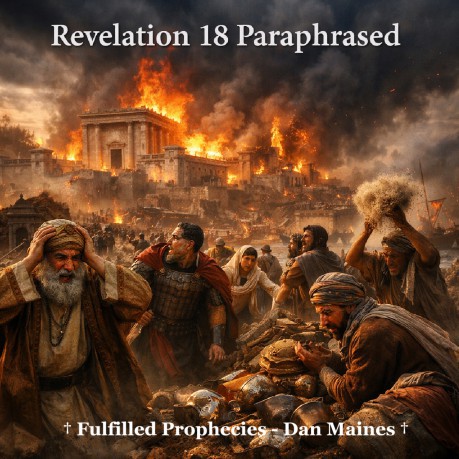
Revelation 18 Paraphrased Introduction † Revelation 18 describes the complete downfall
of the great harlot city that persecuted the prophets and the saints.
The language is dramatic because it shows covenant judgment falling
on the system that rejected Christ. (Matthew 23:35-36) † Jesus warned that judgment would come upon
that generation for killing the prophets and rejecting the Son.
Revelation is showing the final collapse of that corrupt religious
system. (Matthew 23:37-38) † The fall of the harlot city fulfills the
warnings given by the prophets about Jerusalem becoming a harlot and
facing destruction for her unfaithfulness. (Isaiah 1:21; Jeremiah
3:6-8) Revelation 18:1 After these things I saw another messenger coming down from heaven
with great authority, and the earth was lit up with his glory. † This messenger represents a divine
proclamation that the judgment of the harlot city is certain and
authorized by heaven. (Revelation 14:8) † The brightness shows the authority and
clarity of the message, God is making the fall of the city known to
all. (Ezekiel 43:2) † Heaven is announcing that the judgment long
warned by the prophets is now being carried out. (Jeremiah 25:30-31) Revelation 18:2 He cried out with a powerful voice saying, Fallen, fallen is the
great city Babylon. She has become a place for demons, a prison for
every unclean spirit, and a cage for every hateful bird. † The repeated announcement fallen shows the
certainty and finality of the judgment. The corrupt city has
collapsed under God's justice. (Isaiah 21:9) † The description of demons and unclean things
shows how spiritually corrupt the city had become. (Jeremiah 51:37) † Jesus described Jerusalem as desolate after
rejecting Him, which fits the imagery of abandonment and ruin.
(Matthew 23:38) Revelation 18:3 All the nations drank the wine of her immoral influence, the kings
of the earth joined her corruption, and the merchants of the earth
grew rich from her excessive luxury. † The city influenced the nations through its
religious authority and alliances. (Revelation 17:2) † Leaders participated in the corruption
because political power was tied to religious control. (John 11:48) † Wealth and power were used to strengthen the
corrupt system that opposed Christ and His followers. (James 5:1-5) Revelation 18:4 Then I heard another voice from heaven saying, Come out of her my
people, so that you don't share in her sins and don't receive her
plagues. † God's people were warned to separate from the
corrupt system before judgment fell. (2 Corinthians 6:17) † Jesus gave similar warnings for believers to
flee Jerusalem before its destruction. (Luke 21:20-21) † Early Christians followed these warnings and
escaped before the Roman siege began. (Eusebius, Ecclesiastical
History 3.5) Revelation 18:5 Her sins have piled up all the way to heaven, and God has
remembered her crimes. † The imagery shows accumulated guilt reaching
the point where judgment becomes unavoidable. (Genesis 18:20) † The killing of prophets and saints added to
the city's record of guilt. (Matthew 23:34-35) † God does not forget injustice, even when it
appears ignored for a time. (Revelation 16:19) Revelation 18:6 Give back to her as she has given to others, repay her double
according to her works, and mix a double portion in the cup she
prepared. † The principle of judgment matching the crime
appears throughout scripture. (Jeremiah 50:29) † The persecuting city receives the same
suffering it imposed on others. (Obadiah 1:15) † God’s justice answers the cries of the
martyrs who were killed by that system. (Revelation 6:10) Revelation 18:7 As much as she glorified herself and lived in luxury, give her the
same measure of torment and grief. She said in her heart, I sit as a
queen, I am not a widow, and I will never see mourning. † The pride of the city blinded it to the
coming judgment. (Isaiah 47:7-8) † Jerusalem believed her position and temple
guaranteed safety. (Jeremiah 7:4) † That confidence proved false when the Roman
armies surrounded the city. (Luke 19:43-44) Revelation 18:8 For this reason her plagues will come in a single day, death,
mourning, and famine, and she will be burned with fire, because the
Lord God who judges her is strong. † The destruction came suddenly and completely
during the Roman siege. (Luke 21:22) † Fire is often used in scripture to represent
divine judgment against cities that rebel against God. (Jeremiah
17:27) † Josephus recorded that Jerusalem was burned
and destroyed during the war. (Josephus, Wars of the Jews 6.4) Revelation 18:9 The kings of the earth who shared her corruption and luxury will
weep and mourn when they see the smoke of her burning. † Those who benefited from the system mourned
its fall because their power and alliances collapsed. (Revelation
17:2) † The destruction shocked surrounding rulers
who had political ties to the city. (Ezekiel 26:16-17) † The burning city became a sign of the end of
that corrupt order. (Revelation 18:18) Revelation 18:10 They will stand far away because they fear her torment and say,
Woe, woe, the great city, the strong city, because your judgment came
in a single hour. † The phrase one hour shows how quickly the
city collapsed. (Revelation 17:12) † Observers feared the same judgment might fall
on them. (Jeremiah 49:21) † The suddenness confirms Jesus' warning that
the judgment would come swiftly upon that generation. (Matthew 24:34) Revelation 18:11 The merchants of the earth will cry and mourn over her because no
one buys their cargo anymore. † The economic systems tied to the city
collapsed when the city fell. (Ezekiel 27:36) † Trade networks connected to the temple
economy disappeared overnight. (Matthew 21:12-13) † Wealth gained through corruption couldn't
survive the judgment. (James 5:2) Revelation 18:12 Cargo of gold, silver, precious stones, pearls, fine linen, purple
cloth, silk, scarlet cloth, every kind of scented wood, every object
of ivory, every object made from costly wood, bronze, iron, and
marble. † The list shows the extreme wealth that
surrounded the corrupt system. (Ezekiel 27:12-24) † Luxury and religious power often mixed
together in ancient temple systems. (Matthew 23:16-17) † This wealth couldn't save the city from
judgment. (Zephaniah 1:18) Revelation 18:13 Cinnamon, spice, incense, perfume, frankincense, wine, olive oil,
fine flour, wheat, cattle, sheep, horses, chariots, and even human
lives. † The mention of human lives shows exploitation
and oppression within the system. (Ezekiel 22:12) † The leadership used religion to control and
profit from the people. (Matthew 23:4) † Judgment exposes systems that treat people as
commodities. (Habakkuk 2:12) Revelation 18:14 The fruit you desired has left you, all your luxury and splendor
are gone, and they will never be found again. † Everything the city trusted in vanished with
its destruction. (Isaiah 3:16-26) † Judgment removes the false security created
by wealth and power. (Proverbs 11:4) † The fall of the city marked the end of the
old corrupt order. (Hebrews 8:13) Revelation 18:15 The merchants who became rich from her will stand far away because
they fear her torment, crying and mourning. † Those who benefited from corruption rarely
stand close when judgment comes. (Ezekiel 27:31) † The collapse of the system exposed how
temporary their wealth really was. (Ecclesiastes 5:15) † The mourning is not repentance, it is grief
over lost profit. (Revelation 18:19) Revelation 18:16 They say, Woe, woe, the great city that was dressed in fine linen,
purple, and scarlet, and decorated with gold, precious stones, and
pearls. † The clothing imagery shows royal and
religious authority mixed with wealth. (Revelation 17:4) † The outward appearance hid deep corruption.
(Matthew 23:27) † Judgment reveals what was hidden behind the
display of power. (Luke 12:2) Revelation 18:17 In a single hour such great wealth has been destroyed. Every ship
captain, traveler, sailor, and everyone who worked at sea stood far
away. † Trade networks tied to the city collapsed
immediately when the city fell. (Ezekiel 27:29) † The economic influence of the city spread
across the region. (Acts 19:27) † When the center fell, the entire system
collapsed. (Revelation 18:19) Revelation 18:18 They cried out when they saw the smoke of her burning saying, What
city was like the great city? † The burning city became a visible sign of
judgment. (Genesis 19:28) † The same language is used when powerful
cities suddenly fall. (Ezekiel 26:17) † It showed the complete end of the system that
once seemed untouchable. (Jeremiah 51:63-64) Revelation 18:19 They threw dust on their heads and cried out weeping and mourning
saying, Woe, woe, the great city where all who had ships at sea
became rich by her wealth, because in one hour she has been
destroyed. † Throwing dust on the head was a traditional
sign of mourning. (Joshua 7:6) † The destruction ended the prosperity that
depended on the city. (Ezekiel 27:30) † Again the phrase one hour emphasizes the
sudden collapse. (Revelation 18:10) Revelation 18:20 Rejoice over her heaven, and you saints and apostles and prophets,
because God has judged her for what she did to you. † The destruction answered the cries of those
who were persecuted. (Revelation 6:9-11) † Jesus promised that the blood of the prophets
would be avenged in that generation. (Matthew 23:35-36) † Heaven celebrates the justice of God when
oppression ends. (Psalm 58:10) Revelation 18:21 Then a powerful messenger picked up a stone like a large millstone
and threw it into the sea saying, In the same way the great city
Babylon will be thrown down with violence and will never be found
again. † The millstone image represents sudden and
irreversible destruction. (Jeremiah 51:63-64) † The violent fall shows that the corrupt
system will never return in its former form. (Matthew 21:44) † God removes systems that oppose His kingdom.
(Daniel 2:35) Revelation 18:22 The sound of harpists, musicians, flute players, and trumpeters
will never be heard in you again, no craftsman of any trade will be
found in you again, and the sound of the mill will never be heard in
you again. † The city loses all signs of normal life.
(Jeremiah 25:10) † The silence shows the total end of the old
order. (Isaiah 24:8) † The system that persecuted believers has
completely collapsed. (Revelation 18:23) Revelation 18:23 The light of a lamp will never shine in you again, the voice of
the groom and bride will never be heard in you again, because your
merchants were the powerful ones of the earth and your sorcery
deceived all the nations. † The ending of weddings and light represents
total devastation. (Jeremiah 7:34) † The deception of the nations refers to the
corrupt influence of the system. (Revelation 17:5) † Spiritual corruption spreads when religious
power becomes political power. (Matthew 24:24) Revelation 18:24 In her was found the blood of prophets and saints and of all who
were killed on the earth. † Jesus said Jerusalem was responsible for the
blood of the prophets. (Matthew 23:37) † The persecuting system carried the guilt of
killing God's messengers. (Luke 11:50-51) † Revelation confirms that the judgment fell
because of that guilt. (Revelation 17:6) Historical References † Josephus described the destruction of
Jerusalem in AD 70 as a catastrophic collapse with fire, famine, and
massive death. (Josephus, Wars of the Jews 6.4) † Eusebius recorded that Christians fled
Jerusalem before the war, following the warnings given by Christ.
(Eusebius, Ecclesiastical History 3.5) † Tacitus wrote about the Roman campaign that
destroyed the city and temple during that period. (Tacitus, Histories
5.13) How it applies to us today † God eventually brings justice against systems
that persecute truth and righteousness. † Believers are always called to separate from
corrupt systems rather than compromise with them. † The fall of the harlot city reminds us that
earthly power and wealth never last when they stand against God. Q & A Appendix Q: Why is the city called Babylon? Q: Why are the apostles and prophets told to
rejoice? Q: What does coming out of her mean? Q: Why does Revelation say the city fell in one
hour? Q: Why are merchants and kings mourning instead
of repenting? Q: Why does Revelation say the blood of prophets
and saints was found in the city? Q: What does the millstone thrown into the sea
represent? Q: Why are heaven, the apostles, and the prophets
told to rejoice? † This is the fulfilled perspective we proclaim at
Fulfilled Prophecies † Source Index † Matthew 23:35-38; Luke 21:20-22; Revelation
17:2, 6; Revelation 18:1-24
By Dan Maines
A:
Babylon is symbolic language for a corrupt city that persecutes God's
people. The prophets often used Babylon as a symbol for oppressive
systems. (Isaiah 13:19; Revelation 17:5)
A: Because God finally answered the
cries of those who were persecuted and killed. (Revelation 6:10;
Matthew 23:35-36)
A:
It means separating from the corrupt religious system that opposed
Christ and His followers. (2 Corinthians 6:17; Luke 21:20-21)
A: The phrase one hour emphasizes how
suddenly the system collapsed when judgment finally arrived. What
looked powerful and permanent was destroyed quickly once God's
judgment began. (Revelation 18:10, 17, 19; Luke 21:20-22)
A: Their grief is about losing
wealth and influence, not about turning to God. The corrupt system
made many people rich, so when it fell they mourned their loss of
profit. (Revelation 18:11-15; James 5:1-3)
A: Jesus said
Jerusalem was responsible for killing the prophets and would be held
accountable for their blood. Revelation confirms that the judgment
fell because of that long history of persecution. (Matthew 23:34-37;
Luke 11:49-51; Revelation 17:6)
A: The millstone represents complete
and irreversible destruction. Once it sinks, it cannot be recovered,
showing that the corrupt system would never return in its former
form. (Revelation 18:21; Jeremiah 51:63-64)
A: Because the persecution of
God's people had finally been answered. The judgment brought justice
for those who had suffered under that corrupt system. (Revelation
18:20; Revelation 6:9-11; Matthew 23:35-36)
© Fulfilled Prophecies - Dan
Maines.
† Josephus, Wars
of the Jews 6.4; Eusebius, Ecclesiastical History 3.5; Tacitus,
Histories 5.13
Links