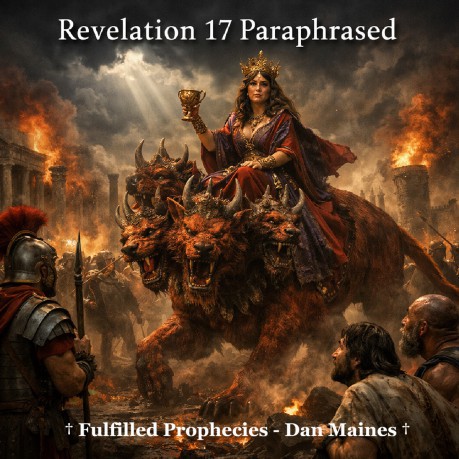
Revelation 17 Paraphrased Introduction † Revelation 17 explains the judgment of the
corrupt city that had become spiritually unfaithful to God. John is
shown the relationship between the woman and the Roman beast that
carried her. The vision reveals how political power and apostate
religion worked together until the time came for judgment. † The prophets often described covenant
unfaithfulness as prostitution. In this chapter that same language is
used to expose a city that once belonged to God but had become
corrupt and violent toward the saints (Isaiah 1:21; Ezekiel 16:15). † Jesus warned that the blood of the prophets
would come upon that generation. Revelation now reveals how that
judgment unfolded during the events leading up to the destruction of
Jerusalem in AD 70 (Matthew 23:35-36). Revelation 17:1 † The many waters represent large populations
and nations under the influence of the corrupt city (Revelation
17:15; Isaiah 17:12). † Prophets often used the image of prostitution
to describe covenant betrayal and religious corruption (Jeremiah
3:6-9). † This introduction prepares the reader to see
the coming judgment against the persecuting city (Matthew 23:37). Revelation 17:2 † The image shows political alliances between
religious leadership and earthly rulers (John 19:15). † The intoxicating wine symbolizes deception
and spiritual corruption spreading among the nations (Jeremiah 51:7). † Those who rejected the Messiah aligned
themselves with worldly power rather than with God (Acts 4:26-27). Revelation 17:3 † The beast represents the Roman imperial power
that dominated the region during the first century (Daniel 7:7). † The seven heads correspond to the line of
Roman Caesars who ruled during that time (Revelation 17:9-10). † The woman sitting on the beast shows a
partnership between apostate religion and imperial power. Revelation 17:4 † Purple and scarlet were colors associated
with wealth, authority, and temple leadership (Exodus 28:5). † The golden cup shows outward religious beauty
hiding inward corruption (Matthew 23:25-27). † The prophets used similar language when
exposing the hypocrisy of corrupt leaders (Jeremiah 51:7). Revelation 17:5 † Babylon becomes a symbolic name for the
corrupt covenant city that persecuted God's people (Revelation
18:24). † Prophets often renamed cities to reflect
their spiritual condition (Isaiah 1:10). † The name exposes the city as the center of
widespread spiritual corruption. Revelation 17:6 † Jerusalem had a long history of killing
prophets and persecuting the righteous (Matthew 23:35-37). † The early church experienced persecution from
the same religious leadership (Acts 7:52). † The phrase drunk with blood emphasizes the
scale of violence against believers. Revelation 17:7 † Apocalyptic visions often require explanation
because they use symbolic language (Daniel 7:16). † The angel prepares John to understand the
historical meaning behind the symbols. † The explanation will identify the rulers and
powers connected to the prophecy. Revelation 17:8 † The language reflects the turmoil in the
Roman Empire following Nero's reign and the temporary collapse of
authority (Revelation 13:3). † Many people believed the imperial power had
fallen, yet it appeared again with renewed authority. † Those outside the book of life are those who
follow worldly power rather than God's kingdom. Revelation 17:9 † Rome was famously known as the city built on
seven hills (Virgil, Aeneid 6.783). † The imagery identifies the imperial system
connected with the prophecy. † The woman sitting on these hills shows her
dependence on Roman authority. Revelation 17:10 † The line of Roman emperors places the
prophecy firmly in the first century. † The one who is refers to the emperor ruling
when the vision was given. † The short reign refers to the unstable
leadership that followed Nero. Revelation 17:11 † The eighth grows out of the line of the seven
rulers, continuing the same imperial authority. † This shows continuity rather than a
completely new empire. † The prophecy anticipates the rulers connected
to the destruction of Jerusalem. Revelation 17:12 † These represent regional rulers and allied
authorities supporting Roman campaigns (Daniel 7:24). † Their authority is temporary and connected to
the war against Jerusalem. † The prophecy highlights the coalition of
power involved in the coming judgment. Revelation 17:13 † Roman forces united under imperial command
during the Jewish war. † Political unity allowed the empire to crush
the rebellion. † Scripture shows God using nations to carry
out judgment against corrupt systems (Isaiah 10:5). Revelation 17:14 † The Roman authorities persecuted the
followers of Christ (Acts 4:27-28). † Even under persecution believers remained
faithful to the Lamb. † Christ's authority stands above every earthly
ruler (Daniel 7:14). Revelation 17:15 † Waters frequently symbolize large groups of
people in prophecy (Isaiah 17:12). † The statement confirms the widespread
influence of the corrupt system. † The religious leadership affected many
nations through their authority. Revelation 17:16 † This describes the Roman destruction of
Jerusalem in AD 70 (Luke 21:20-22). † The empire that once cooperated with the city
eventually turned against her. † The imagery reflects prophetic judgment
language used throughout the Old Testament (Ezekiel 16:37). Revelation 17:17 † God directs history even through the actions
of powerful empires (Isaiah 46:10). † The fall of Jerusalem fulfilled the warnings
given by Jesus. † Prophecy shows that God's purposes cannot be
stopped. Revelation 17:18 † In the first century Jerusalem held enormous
religious authority in the region. † Jesus described Jerusalem as the city that
killed the prophets (Matthew 23:37). † The prophecy points to the city judged during
the events of AD 70. Historical References † Josephus recorded the siege and destruction
of Jerusalem by Roman armies (Josephus, Wars of the Jews, Book 6). † Tacitus described the Roman campaign against
the Jewish nation (Tacitus, Histories 5.13). † Eusebius documented how believers fled
Jerusalem before the city's destruction (Eusebius, Ecclesiastical
History 3.5). How It Applies To Us Today † Revelation 17 reminds us that religious
hypocrisy and corruption will not escape God's judgment. † God sees injustice and persecution, and he
brings accountability in his time. † Believers today are called to remain faithful
to Christ even when the world opposes them. Q & A Appendix Q: Who is the woman described in Revelation
17? Q: What does the beast represent in this
chapter? Q: When was this prophecy fulfilled? Q: What are the seven mountains mentioned in
Revelation 17:9? Q: Why is the woman called Babylon in Revelation
17:5? Q: Why does the beast turn against the woman in
Revelation 17:16? † This is the fulfilled perspective we proclaim at
Fulfilled Prophecies † Source Index † Revelation 17; Matthew 23:35-37; Luke
21:20-22; Daniel 7:7, 14, 24; Isaiah 46:10; Isaiah 17:12; Jeremiah
51:7
By Dan Maines
One of the seven angels who
had the bowls came and spoke with me and said, Come here and I'll
show you the judgment that is coming on the great prostitute who sits
over many waters.
The kings of the earth
committed immorality with her, and the people of the earth became
intoxicated with the wine of her corruption.
He carried me away in the
Spirit into a wilderness, and I saw a woman sitting on a scarlet
beast full of blasphemous names, with seven heads and ten horns.
The woman was dressed in
purple and scarlet and decorated with gold, precious stones, and
pearls. She held a golden cup filled with disgusting things and the
impurities of her immorality.
On her forehead was written
a mysterious name: Babylon the Great, the mother of prostitutes and
of the disgusting things of the earth.
I saw that the woman was
drunk with the blood of God's people and with the blood of those who
testified about Jesus, and when I saw her I was greatly amazed.
The angel said to me, Why
are you amazed? I'll explain the mystery of the woman and of the
beast that carries her, the one with seven heads and ten horns.
The beast you saw once
existed, now it isn't, and it is about to rise out of the abyss and
go to destruction. Those who live on the earth whose names are not
written in the book of life will be amazed when they see the beast
that once existed, now isn't, and yet appears again.
This calls for a mind with
wisdom. The seven heads are seven mountains on which the woman sits.
They are also seven kings.
Five have fallen, one is ruling now, and the other hasn't yet come,
but when he comes he must remain only a short time.
The beast that once existed
and now isn't is also an eighth king, yet he belongs to the seven and
he is going to destruction.
The ten horns you saw are
ten kings who haven't yet received a kingdom, but they receive
authority as kings with the beast for a short time.
These rulers share one
purpose and give their power and authority to the beast.
They will fight against the
Lamb, but the Lamb will overcome them because he is Lord of lords and
King of kings, and those with him are called, chosen, and faithful.
Then he said to me, The
waters you saw where the prostitute sits are peoples, crowds,
nations, and languages.
The ten horns and the beast
will hate the prostitute. They will make her desolate and naked, they
will devour her flesh and burn her with fire.
God placed it in their
hearts to carry out his purpose by agreeing to give their kingdom to
the beast until God's words are fulfilled.
The woman you saw is the
great city that ruled over the kings of the earth.
A: She represents the corrupt covenant city
that persecuted the prophets and saints (Matthew 23:35-37; Revelation
18:24).
A: The beast represents the Roman
imperial rulers who dominated the region during the first century
(Daniel 7:7; Revelation 13:1).
A:
The judgment described in Revelation 17 was fulfilled when Rome
destroyed Jerusalem in AD 70 (Luke 21:20-22).
A: The seven mountains
identify the city connected with the Roman imperial system, widely
known in the ancient world as the city built on seven hills
(Revelation 17:9-10; Daniel 7:7).
A: Babylon is a prophetic name used to
describe a city that had become spiritually corrupt and persecuted
God's people, just as ancient Babylon once did (Revelation 18:24;
Matthew 23:35-37).
A: The same political power
that supported the corrupt city eventually carried out God's judgment
against it, which happened when Rome destroyed Jerusalem in AD 70
(Luke 21:20-22; Ezekiel 16:37).
© Fulfilled Prophecies - Dan
Maines.
† Josephus, Wars of the Jews, Book 6;
Tacitus, Histories 5.13; Eusebius, Ecclesiastical History 3.5
Links