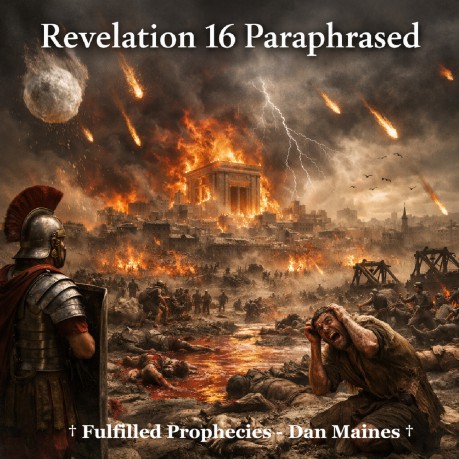
Revelation 16 Paraphrased Introduction † Revelation 16 describes the pouring out of the final judgments
against the apostate system that rejected Christ and persecuted His
people. These bowls are not random disasters in a distant future.
They are covenant judgments falling on the same generation that
rejected the Messiah, just as Jesus warned. † Jesus had already foretold a time of great distress upon that
generation. Matthew 23:36 says All these things will come upon this
generation. Revelation simply reveals how those judgments unfolded
during the events leading up to the destruction of Jerusalem in AD
70. † The imagery echoes the plagues of Egypt. Just as God judged
Egypt for oppressing Israel, He judged Jerusalem for rejecting and
killing the prophets and the Messiah. Revelation 16:1 Then I heard a loud voice from the temple telling the seven
angels, Go and pour out the seven bowls of God's wrath upon the land. † The voice coming from the temple shows that these judgments
are covenant judgments connected to Israel's own sanctuary. Judgment
begins with the house of God (1 Peter 4:17). † Jesus warned that wrath was coming upon that generation. Luke
21:22 says For these are days of vengeance, so that all things which
are written will be fulfilled. † The bowls symbolize the completion of judgment. Earlier
trumpet warnings were partial, but now the full measure of wrath is
poured out. Revelation 16:2 The first angel went and poured out his bowl upon the land, and
painful and infected sores broke out on the people who carried the
mark of the beast and worshiped his image. † The sores recall the plagues of Egypt (Exodus 9:8-11). Just as
Egypt was judged for persecuting God's people, Jerusalem now faces
similar covenant plagues. † Those with the mark of the beast represent those aligned with
the Roman imperial system and the corrupt priestly leadership who
collaborated with Rome. † Josephus records terrible diseases and suffering during the
siege of Jerusalem, confirming the intense conditions that matched
the imagery of judgment. Revelation 16:3 The second angel poured out his bowl into the sea, and it became
like the blood of a dead man, and every living thing in the sea died. † The sea often symbolizes the Gentile world or the nations. The
imagery reflects massive bloodshed spreading throughout the Roman
world. † The Jewish war brought death across the region, especially
around Judea and the Mediterranean. † The language echoes the Nile turning to blood (Exodus 7:20),
showing that covenant rebellion brings covenant judgment. Revelation 16:4 The third angel poured out his bowl into the rivers and springs of
water, and they became blood. † The rivers and springs represent the sources of life being
turned into instruments of judgment. † Blood imagery reflects the guilt of shedding the blood of the
prophets and the saints (Matthew 23:34-35). † Jerusalem had become the city that killed the prophets, and
now the judgment mirrors the blood they had shed. Revelation 16:5 Then I heard the angel of the waters saying, You are righteous,
the One who is and who was, because You have judged these things. † God's justice is being affirmed. These judgments are not
cruelty but righteous justice. † The phrase who is and who was reflects God's eternal authority
over history and covenant dealings. † God's judgments throughout scripture always demonstrate His
righteousness when His covenant is broken. Revelation 16:6 For they poured out the blood of saints and prophets, and You have
given them blood to drink. They deserve it. † Jesus said Jerusalem was guilty of the blood of the prophets
(Matthew 23:37). † Revelation identifies the reason for the judgment. The city
that killed the prophets would face divine retribution. † This is covenant justice, the punishment matching the crime. Revelation 16:7 And I heard the altar saying, Yes, Lord God Almighty, true and
righteous are Your judgments. † The altar represents the place where the martyrs cried out
earlier for justice (Revelation 6:9-10). † Now their prayers are answered as God brings judgment upon
those responsible. † God's judgments always vindicate the faithful who suffered
persecution. Revelation 16:8 The fourth angel poured out his bowl upon the sun, and it was
allowed to scorch people with fierce heat. † The sun often symbolizes ruling authorities. Scorching heat
represents oppressive political turmoil and suffering. † During the Jewish war the land experienced intense famine,
chaos, and violence that devastated the population. † The imagery also reflects prophetic language used by Isaiah
and Joel to describe national judgment. Revelation 16:9 People were scorched by the fierce heat, yet they cursed the name
of God who had power over these plagues, and they refused to repent
and give Him glory. † Even under judgment many refused to repent. This reflects the
stubborn resistance Jesus encountered during His ministry. † Hard hearts under judgment mirror Pharaoh's response in the
Exodus story. † The refusal to repent confirms that the judgment was deserved. Revelation 16:10 Then the fifth angel poured out his bowl on the throne of the
beast, and his kingdom became darkened, and people chewed their
tongues in pain. † The throne of the beast refers to the Roman imperial authority
that dominated Judea. † Darkness symbolizes the collapse of power and the chaos
surrounding the Jewish war. † The Roman civil wars after Nero's death in AD 68 brought
instability across the empire. Revelation 16:11 They cursed the God of heaven because of their pains and sores,
but they still refused to repent of their deeds. † Instead of repentance, the response was continued rebellion. † Scripture repeatedly shows that hardened hearts resist even
clear judgment. † This confirms that the destruction of Jerusalem was the
inevitable result of persistent rejection of God's warnings. Revelation 16:12 The sixth angel poured out his bowl upon the great river
Euphrates, and its water dried up so that the way would be prepared
for the kings from the east. † The Euphrates was the eastern boundary of the Roman Empire. † Drying up symbolizes the removal of barriers allowing armies
to advance. † Roman legions came from the eastern provinces to surround
Jerusalem during the war. Revelation 16:13 Then I saw three unclean spirits like frogs coming from the mouth
of the dragon, from the mouth of the beast, and from the mouth of the
false prophet. † The frogs recall the plague of frogs in Egypt (Exodus 8). † These spirits represent deceptive propaganda and false
religious influence driving people toward war. † The dragon represents Satan, the beast represents the Roman
ruler, and the false prophet represents the corrupt religious
leadership. Revelation 16:14 They are spirits of demons performing signs and going out to the
kings of the whole world to gather them for the battle of the great
day of God Almighty. † The gathering of armies describes the buildup to the final
conflict surrounding Jerusalem. † The Jewish revolt drew massive Roman military response from
across the empire. † This battle represents the climax of covenant judgment. Revelation 16:15 Look, I am coming like a thief. Blessed is the one who stays alert
and keeps his garments, so that he won't walk around naked and be
exposed. † Jesus had already warned His disciples about His coming
judgment. Matthew 24:43 compares it to a thief in the night. † Staying alert refers to spiritual readiness and faithfulness. † Those who followed Christ escaped Jerusalem before the
destruction. Revelation 16:16 They gathered them together to the place that in Hebrew is called
Armageddon. † Armageddon symbolizes a decisive place of judgment, drawing
from Old Testament battle imagery. † It represents the gathering of forces leading to the fall of
Jerusalem. † The term reflects the climax of God's covenant judgment. Revelation 16:17 Then the seventh angel poured out his bowl into the air, and a
loud voice came from the temple throne saying, It is done. † This marks the completion of judgment. † The phrase It is done mirrors the finality of God's redemptive
and judicial plan. † The old covenant order was about to pass away. Revelation 16:18 Flashes of lightning, rumblings, thunder, and a massive earthquake
followed, greater than anything that had ever happened since people
were on the earth. † Earthquake imagery symbolizes political and covenant upheaval. † The destruction of Jerusalem in AD 70 was the greatest
national catastrophe in Jewish history. † Prophets often used earthquake language to describe the fall
of nations. Revelation 16:19 The great city was split into three parts, and the cities of the
nations fell. God remembered Babylon the great and gave her the cup
filled with the wine of His fierce wrath. † The great city refers to Jerusalem, identified earlier as the
city where the Lord was crucified (Revelation 11:8). † Babylon represents the apostate system opposing God's kingdom. † The cup of wrath echoes Old Testament imagery of divine
judgment. Revelation 16:20 Every island fled away, and the mountains could no longer be
found. † Islands and mountains symbolize political powers and stable
institutions collapsing. † The destruction of the temple and priesthood marked the end of
the old covenant system. † The prophetic language reflects the complete removal of the
former order. Revelation 16:21 Huge hailstones, each weighing about a talent, fell from heaven
upon people, and they cursed God because of the plague of the hail,
because the plague was extremely severe. † Hailstones were another plague seen in Egypt (Exodus 9:23-25). † Josephus records massive stones hurled into Jerusalem during
the siege by Roman siege engines. † The imagery perfectly fits the historical events of the war. Historical References † Josephus describes famine, disease, and massive destruction
during the siege of Jerusalem in The Wars of the Jews. † Tacitus recorded the chaos and devastation surrounding the
Jewish revolt and the Roman military campaigns. † Eusebius recorded that Christians fled Jerusalem before the
destruction, fulfilling Jesus' warning. How It Applies To Us Today † God's warnings should never be ignored. Jerusalem's
destruction proves that God keeps His word. † Christ reigns now, and His kingdom cannot be shaken even when
earthly systems collapse. † We live in the fulfillment of the kingdom promises, not
waiting for them but walking in them. Q & A Appendix Q: Did these bowl judgments happen in the
future? Q: What is Armageddon in the fulfilled
perspective? Q: Why are the plagues similar to the plagues of
Egypt? Q: What does the phrase It is done mean in
Revelation 16:17? Q: Why do the plagues in Revelation resemble the
plagues of Egypt? Q: What does the great earthquake symbolize in
Revelation 16:18? Q: Why do people continue to curse God instead of
repenting during the plagues? Q: What does the hail in Revelation 16:21 point
to historically? † This is the fulfilled perspective we proclaim at
Fulfilled Prophecies † Source Index † Revelation 16; Matthew 23:36; Matthew 24:34;
Luke 21:22; Revelation 11:8
By Dan Maines
A: No. Jesus said the judgment would
come upon that generation (Matthew 23:36; Matthew 24:34). The events
leading to AD 70 fulfill these prophecies.
A: It represents the gathering of
forces leading to the destruction of Jerusalem during the Jewish war
(Revelation 16:16; Luke 21:20).
A: Because God was judging a
covenant-breaking nation just as He judged Egypt (Exodus 7-12;
Revelation 16).
A: It announces the
completion of the covenant judgment that Jesus said would come upon
that generation. The old covenant system centered on the temple was
finished. Hebrews 8:13 says When He said, A new covenant, He has made
the first obsolete. But whatever is becoming obsolete and growing old
is ready to disappear.
A: God was showing that the
same kind of covenant judgment that fell on Egypt was now falling on
Jerusalem for rejecting the Messiah. Exodus 9:23-25 shows hail and
plagues falling on Egypt, and Revelation 16 repeats that imagery to
show divine judgment on a rebellious nation.
A: In prophetic language an
earthquake represents the collapse of a nation or covenant system.
Hebrews 12:26-27 explains that God would shake heaven and earth so
that what can be shaken would be removed. The destruction of
Jerusalem and the temple in AD 70 marked that great covenant shaking.
A: Scripture
shows that hardened hearts resist even clear judgment. Just as
Pharaoh hardened his heart during the plagues of Egypt, many in
Jerusalem refused to repent even when judgment was falling. Luke
19:41-44 shows Jesus warning that they did not recognize the time of
their visitation.
A: Josephus recorded that
Roman siege engines hurled massive stones into Jerusalem during the
siege, stones that weighed about a talent. This historical detail
closely matches the imagery of giant hailstones falling from heaven
during the final judgment of the city.
© Fulfilled Prophecies - Dan
Maines.
† Josephus, The
Wars of the Jews
† Tacitus, Histories 5
†
Eusebius, Ecclesiastical History 3.5
Links