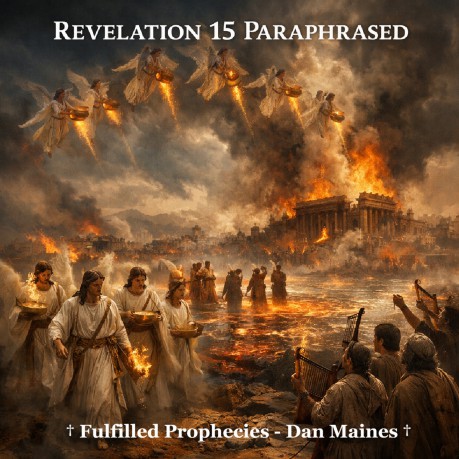
Revelation 15 Paraphrased Introduction † Revelation now shows another vision of final
judgment that was about to fall on Jerusalem and the persecuting
powers of that age (Matthew 23:36; Luke 21:22). † These signs represent the completion of God's
wrath against the old covenant system that rejected the Messiah and
persecuted His people (Matthew 21:43; Hebrews 8:13). † The language is symbolic and covenantal,
pointing to the end of the old temple order and the vindication of
Christ and His followers (Revelation 1:1; Luke 21:20-22). Revelation 15:1 Revelation 15:1 † The seven final plagues symbolize the
completion of covenant judgment against Jerusalem and the temple
system that rejected Christ (Matthew 23:37-38). † Jesus said all the righteous blood would come
upon that generation, showing that this judgment was directed toward
the first century audience (Matthew 23:35-36). † The idea of wrath being completed points to
the closing of the old covenant age when the temple was destroyed in
AD 70 (Hebrews 9:26). Revelation 15:2 Revelation 15:2 † The sea of glass represents God's throne
presence, showing the victorious believers standing before Him after
enduring persecution (Revelation 4:6). † Those who overcame the beast represent
Christians who refused allegiance to the Roman emperor and remained
faithful to Christ (Revelation 13:15-17). † The harps symbolize worship and victory,
showing that God's people were vindicated despite the suffering they
endured (Revelation 14:2-3). Revelation 15:3 Revelation 15:3 † The song of Moses recalls Israel's
deliverance from Egypt, showing that God was again delivering His
people from oppression (Exodus 15:1-3). † The song of the Lamb connects that earlier
deliverance with the greater salvation accomplished through Christ
(John 1:29). † This union of Moses and the Lamb shows the
fulfillment of the law and prophets through Jesus (Matthew 5:17). Revelation 15:4 Revelation 15:4 † The expansion to all nations shows the global
reach of the gospel after the fall of the old covenant system
(Matthew 28:19). † God's righteous acts refer to His judgment
and salvation being revealed together (Romans 3:21-26). † The fall of Jerusalem removed the barrier
that once separated Jew and Gentile under the old covenant order
(Ephesians 2:14-16). Revelation 15:5 Revelation 15:5 † This vision points to the heavenly reality
behind the earthly temple, showing that God's true dwelling was never
limited to the physical building in Jerusalem (Acts 7:48-50). † The opening of the heavenly temple reveals
that judgment is coming from God's authority, not from earthly power
(Hebrews 9:24). † It also signals that the earthly temple
system was about to be removed (Matthew 24:2). Revelation 15:6 Revelation 15:6 † Their clothing reflects purity and divine
authority, indicating they carry out God's righteous judgment (Daniel
10:5-6). † The angels coming from the temple shows that
the judgment originates from God's holy presence (Psalm 11:4). † The symbolism emphasizes that these events
are part of God's planned justice, not random disasters (Revelation
16:1). Revelation 15:7 Revelation 15:7 † The bowls represent the outpouring of God's
covenant judgment that would soon fall upon the rebellious city
(Revelation 16:1). † The living creatures around the throne
symbolize the authority of heaven confirming this judgment
(Revelation 4:6-8). † God's eternal nature highlights that His
justice is righteous and final (Deuteronomy 32:39-41). Revelation 15:8 Revelation 15:8 † The smoke recalls God's presence filling the
tabernacle and temple, showing His holiness and authority (Exodus
40:34-35). † It also signals that judgment had begun and
could not be stopped until it was completed (Isaiah 6:4). † The completion of these plagues points
forward to the destruction of Jerusalem, when the old temple system
finally ended (Luke 21:20-22). Historical References † Josephus recorded that Jerusalem was filled
with turmoil, famine, and violence before its destruction, matching
the intense judgments described in Revelation (Josephus, Wars of the
Jews, Book 5-6). † Eusebius wrote that Christians fled Jerusalem
before the destruction after recognizing the signs Jesus gave
(Eusebius, Ecclesiastical History 3.5). † Tacitus described the terrible suffering and
collapse of Jerusalem during the Roman siege (Tacitus, Histories
5.12-13). How It Applies To Us Today † This chapter reminds us that Christ keeps His
promises and His warnings always come to pass (Matthew 24:34). † It shows that faithfulness during persecution
leads to victory with Christ (Revelation 2:10). † It also encourages believers to trust God's
justice, because even when evil seems powerful, God ultimately brings
judgment and vindication (Romans 12:19). Q & A Appendix Q: What do the seven plagues represent? Q: Who are those standing by the sea of glass? Q: Why is the song of Moses and the Lamb
mentioned together? Q: Why was the temple filled with smoke? Q: Why are these plagues called the last
plagues? Q: Why are the believers shown standing on the
sea of glass with fire? Q: Why do they sing both the song of Moses and
the song of the Lamb? Q: What does the smoke filling the temple
represent? Q: Why does Revelation show angels pouring out
bowls of wrath? Q: How does this chapter confirm the fulfilled
perspective? † This is the fulfilled perspective we proclaim at
Fulfilled Prophecies † Source Index † Revelation 15:1-8; Matthew 23:35-38; Luke
21:20-22; Hebrews 8:13; Hebrews 9:26; Revelation 4:6-8; Revelation
13:15-17; Revelation 14:2-3; Exodus 15:1-3; John 1:29; Matthew 5:17;
Matthew 28:19; Romans 3:21-26; Ephesians 2:14-16; Acts 7:48-50;
Hebrews 9:24; Matthew 24:2; Daniel 10:5-6; Psalm 11:4; Revelation
16:1; Deuteronomy 32:39-41; Exodus 40:34-35; Isaiah 6:4; Romans
12:19. † Josephus, Wars of the Jews, Book 5-6;
Eusebius, Ecclesiastical History 3.5; Tacitus, Histories 5.12-13.
By Dan Maines
Then I saw another great and
amazing sign in heaven. Seven angels appeared holding seven final
plagues, because through them God's wrath would be completed.
Then I saw something like a
sea of glass mixed with fire, and standing beside it were those who
had overcome the beast, his image, and the number of his name. They
were holding harps given to them by God.
They were singing the song
of Moses the servant of God and the song of the Lamb, saying: Great
and wonderful are your works, Lord God Almighty. Your ways are just
and true, King of the nations.
Who will not fear you, Lord,
and glorify your name? You alone are holy. All nations will come and
worship before you, because your righteous acts have been revealed.
After these things I looked,
and the temple of the tabernacle of testimony in heaven was opened.
The seven angels who held
the seven plagues came out of the temple. They were dressed in clean
shining linen and had golden sashes around their chests.
Then one of the four living
creatures gave the seven angels seven golden bowls filled with the
wrath of God who lives forever and ever.
The temple was filled with
smoke from the glory of God and from His power, and no one could
enter the temple until the seven plagues of the seven angels were
finished.
A:
They represent the final covenant judgments that fell upon Jerusalem
and the old temple system in AD 70 (Luke 21:20-22; Matthew 23:36).
A:
They are believers who remained faithful during persecution and
overcame the authority of the beast and the Roman imperial system
(Revelation 13:15-17; Revelation 14:12).
A: It shows that the
salvation accomplished by Christ fulfills the earlier deliverance God
gave through Moses (Exodus 15:1-3; Matthew 5:17).
A:
It represents the powerful presence of God and the certainty that His
judgment would be completed before the temple system ended (Exodus
40:34-35; Luke 21:20-22).
A: Because they represent the final
stage of God's covenant judgment against the old covenant order that
rejected Christ. Once Jerusalem and the temple were destroyed, the
old system ended completely (Hebrews 8:13; Luke 21:22).
A: This symbolizes
victory after persecution. The fire represents the trials they
endured, and standing before God shows they overcame the power of the
beast and remained faithful (Revelation 13:15-17; Revelation 14:12).
A: The song of Moses
celebrated Israel's deliverance from Egypt, and the song of the Lamb
celebrates the greater deliverance through Christ. Together they show
the fulfillment of God's redemption plan (Exodus 15:1-3; John 1:29;
Matthew 5:17).
A: It represents the powerful
presence and authority of God during the time of judgment. Just as
God's glory filled the tabernacle, this shows that the coming
judgment was directly from Him and could not be stopped until it was
completed (Exodus 40:34-35; Isaiah 6:4).
A: The bowls symbolize the
complete outpouring of God's judgment that came upon the rebellious
generation that rejected the Messiah and persecuted His followers
(Matthew 23:36; Luke 21:20-22).
A: The judgments are shown as
finishing God's wrath. That fits perfectly with the destruction of
Jerusalem in AD 70, when the temple system ended and the old covenant
age passed away (Matthew 24:2; Hebrews 9:26).
© Fulfilled Prophecies - Dan
Maines.
Links