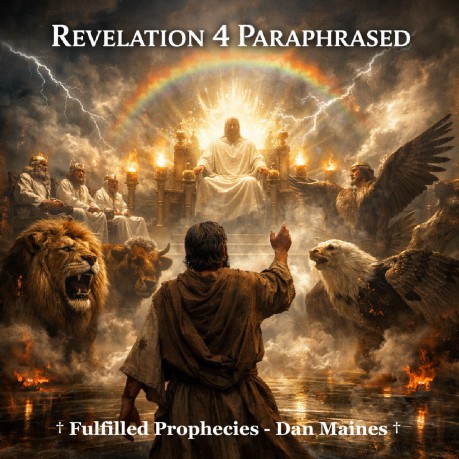
Revelation 4 Paraphrased Introduction † Revelation 4 shifts the scene from the messages to the seven
churches into a heavenly courtroom vision where God is shown as the
true ruler over history. This vision wasn't given to satisfy
curiosity about heaven, it was given to strengthen believers who were
facing persecution from Rome and pressure from apostate Israel
(Revelation 1:1, Revelation 1:3). † The vision reminds the churches that no matter what kings or
empires claim authority on earth, the throne in heaven is occupied.
God is ruling, judging, and directing the events that would soon
unfold against Jerusalem and the persecuting powers (Daniel 7:9-10). † John is shown a throne room scene that mirrors the prophetic
throne visions seen by Isaiah and Ezekiel. This confirms that the
judgment about to unfold in the following chapters comes directly
from the authority of God Himself (Isaiah 6:1-4, Ezekiel 1:26-28). Revelation 4:1 Revelation 4:1 † The open door shows that John is being allowed to see the
heavenly court where God's plans are revealed before they unfold on
earth (Amos 3:7). † The trumpet-like voice connects directly back to Christ
speaking in Revelation 1:10, showing that Jesus is the one guiding
John through this vision. † The phrase what must take place soon reminds us that the
events revealed in this book were about to occur in their generation,
not thousands of years later (Revelation 1:1, Revelation 22:6). Revelation 4:2 Revelation 4:2 † The throne is the central focus of the vision. Revelation
repeatedly points back to God's throne to remind the churches that
real authority doesn't belong to Caesar but to God (Psalm 103:19). † Being taken in the Spirit means John is seeing a prophetic
vision, the same type of experience the Old Testament prophets had
when God revealed heavenly scenes to them (Ezekiel 2:2). † The throne imagery directly parallels Daniel's vision of God's
court preparing for judgment (Daniel 7:9). Revelation 4:3 Revelation 4:3 † The brilliance of the stones represents the glory and purity
of God which no human can fully describe (1 Timothy 6:16). † The rainbow around the throne reminds us of God's covenant
mercy first seen after the flood, showing that even in judgment God
remembers His covenant promises (Genesis 9:13). † Ezekiel described God's throne with similar radiant colors and
light, confirming that John is witnessing the same divine majesty
(Ezekiel 1:27-28). Revelation 4:4 Revelation 4:4 † The twenty four elders represent the complete people of God,
often understood as the twelve tribes of Israel and the twelve
apostles combined, showing the full covenant community gathered
before God (Revelation 21:12-14). † The white robes symbolize righteousness given by God to His
people (Revelation 3:5). † The crowns show victory, meaning God's people share in the
triumph over their enemies through Christ (2 Timothy 4:8). Revelation 4:5 Revelation 4:5 † Thunder and lightning are classic signs of God's presence in
judgment, just as seen at Mount Sinai (Exodus 19:16). † The seven spirits symbolize the fullness and completeness of
God's Spirit actively working in the world (Isaiah 11:2). † This scene prepares the reader for the judgments that will
soon be released from this throne. Revelation 4:6 Revelation 4:6 † The sea of glass represents separation between God and
creation, yet it is calm and clear, showing His control over chaos
(Exodus 24:10). † The four living creatures resemble the cherubim described in
Ezekiel's vision who serve around God's throne (Ezekiel 1:5-10). † The many eyes represent complete awareness, nothing in
creation escapes God's knowledge. Revelation 4:7 Revelation 4:7 † These creatures represent the highest forms of created life,
symbolizing the whole creation praising God. † Similar creatures appear in Ezekiel's vision where they carry
the throne of God, representing divine authority moving throughout
the earth (Ezekiel 1:10). † Their different forms symbolize strength, service,
intelligence, and swiftness. Revelation 4:8 Revelation 4:8 † This declaration directly echoes Isaiah's vision where the
seraphim continually praise God's holiness (Isaiah 6:3). † The phrase who was and who is and who is coming emphasizes
God's eternal nature and His active involvement in history
(Revelation 1:8). † The unending praise shows that God's holiness and authority
never stop. Revelation 4:9 Revelation 4:9 † This shows a pattern of worship where all creation
acknowledges God's eternal rule. † The emphasis on forever and ever highlights that God's
authority cannot be replaced by earthly kingdoms. † The worship scene shows heaven responding to God's righteous
rule. Revelation 4:10 Revelation 4:10 † The elders laying down their crowns shows that even the
authority given to God's people ultimately belongs to Him. † It represents humility and recognition that all victory comes
from God (James 4:10). † Their worship reflects the rightful response of the redeemed
community. Revelation 4:11 Revelation 4:11 † The worship concludes with a declaration that God alone is
worthy because He is the Creator of everything. † This statement directly challenges the Roman emperor worship
that claimed divine authority. † The early Christians confessed that only God is worthy of
ultimate worship, not Caesar (Acts 17:24-25). Historical References † Irenaeus described the throne vision as a revelation of God's
sovereign rule over the church during persecution. † Eusebius wrote that early believers read Revelation as
assurance that God governed events during the fall of Jerusalem. † Tertullian emphasized that the throne imagery showed Christ's
authority over the Roman Empire. How It Applies To Us Today † This vision reminds us that God's throne is still the center
of authority no matter what happens in the world. † Believers today can have confidence that history is not
random, God is directing it according to His will. † The throne vision calls us to worship God alone and not place
our trust in earthly systems or political power. Q & A Appendix Q: Why was John shown heaven before the judgments
began? Q: Who are the twenty four elders? Q: Why is God constantly praised as holy? Q: Why was John told to come up to heaven to see
the vision? Q: What does the open door in heaven
represent? Q: Why are there thunder and lightning coming
from the throne? Q: What is the purpose of the creatures
constantly worshiping God? † This is the fulfilled perspective we proclaim at
Fulfilled Prophecies † Source Index † Revelation 4:1-11, Revelation 1:1, Revelation
1:3, Revelation 22:6, Daniel 7:9-10, Isaiah 6:1-4, Ezekiel 1:26-28,
Amos 3:7, Psalm 103:19, Genesis 9:13, Exodus 19:16, Isaiah 11:2,
Ezekiel 1:5-10, Isaiah 6:3, Acts 17:24-25, Revelation 21:12-14. † Irenaeus, Against Heresies; Eusebius,
Ecclesiastical History; Tertullian, Apology.
By Dan Maines
After this I looked and saw a
door standing open in heaven, and the same voice that sounded like a
trumpet spoke to me again saying come up here and I'll show you what
must take place after these things.
Immediately I was taken in
the Spirit, and there before me was a throne standing in heaven, and
someone was seated on the throne.
The one sitting there shined
with the brilliance of precious stones like jasper and carnelian, and
a rainbow glowing like emerald surrounded the throne.
Around the throne were twenty
four thrones, and seated on them were twenty four elders dressed in
white robes with golden crowns on their heads.
Flashes of lightning,
rumblings, and thunder came from the throne, and seven burning
torches stood before the throne which are the seven spirits of God.
Before the throne there was
something like a sea of glass clear as crystal, and in the center
around the throne were four living creatures covered with eyes in
front and behind.
The first creature looked
like a lion, the second like an ox, the third had a face like a man,
and the fourth looked like an eagle in flight.
Each of the four living
creatures had six wings and was covered with eyes all around and
within, and day and night they never stop saying Holy Holy Holy is
the Lord God the Almighty who was and who is and who is coming.
Whenever the living creatures
give glory and honor and thanks to the one seated on the throne who
lives forever and ever,
The twenty four elders fall
down before the one seated on the throne and worship Him who lives
forever and ever, and they lay their crowns before the throne saying
You are worthy our Lord and
God to receive glory and honor and power because You created all
things, and because of Your will they existed and were created.
A: God often reveals His authority first
so believers understand that the coming judgments come from His
throne. Daniel saw the same thing before the judgment of kingdoms
(Daniel 7:9-10).
A:
They represent the complete people of God, symbolizing the unity of
God's covenant people from both Israel and the apostles (Revelation
21:12-14).
A:
God's holiness shows His absolute purity and authority over creation.
The same declaration was made in Isaiah's throne vision (Isaiah 6:3).
A: John was being shown the
heavenly courtroom where God reveals His plans before they happen on
earth. The prophets were often shown God's council before judgment
events unfolded (Amos 3:7, Daniel 7:9-10).
A: The open door means God was
allowing John to see divine revelation that normally remains hidden.
Similar language is used when God reveals spiritual understanding to
His people (Ezekiel 1:1, Matthew 3:16).
A: Thunder and lightning are
symbols of God's presence and impending judgment. The same imagery
appeared when God revealed His authority at Mount Sinai (Exodus
19:16, Psalm 77:18).
A: Their continuous
worship shows that all creation recognizes God's holiness and
authority. This same worship scene appears in Isaiah's vision where
the heavenly beings never stop declaring God's holiness (Isaiah 6:3,
Psalm 145:3).
© Fulfilled Prophecies - Dan
Maines.
Links