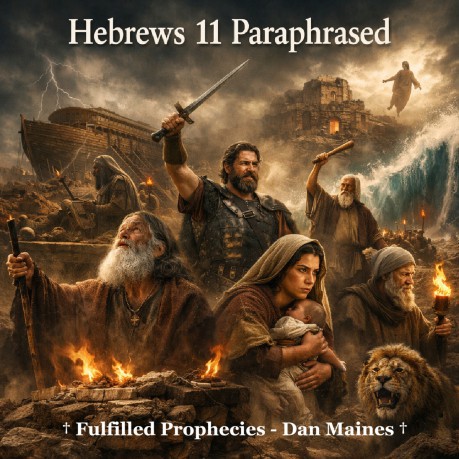
Hebrews 11 Paraphrased Introduction † Hebrews 11 explains what faith really is and
then walks through the lives of men and women who trusted God before
the fulfillment arrived. The writer is showing the Hebrew believers
that faith always looked forward to what God promised, and that
promise was finally completed in Christ. (Hebrews 10:36-39) † The chapter isn't about blind belief. It's
about trusting God's word even before the promise was visible. These
people lived before the age of fulfillment, yet they acted because
they believed God would keep His word. (Romans 4:20-21) † The message to the first century church was
clear. Don't turn back to the old covenant system. The faithful
before you endured because they believed God's promise would come
through the Messiah. (Hebrews 10:38) Scripture Hebrews 11:1 † Faith isn't imagination. It's confidence that
God will do what He said even before the promise appears. (Romans
8:24-25) † The early believers were waiting for the
completion of God's covenant promises, which were about to be
fulfilled in their generation. (Hebrews 10:36-37) † Faith always rests on God's word, not human
feelings or speculation. (2 Corinthians 5:7) Hebrews 11:2 † The Old Testament saints were accepted
because they trusted God's promises even though they hadn't yet seen
the fulfillment. (Romans 4:3) † Their faith pointed forward to Christ, the
one who would bring the promises to completion. (Galatians 3:24) † God honored their faith because it trusted
His word above everything else. (Psalm 33:4) Hebrews 11:3 † Creation itself shows that God's power brings
visible results from His invisible authority. (Genesis 1:1-3) † Faith recognizes God's unseen power behind
everything that exists. (Romans 1:20) † The same God who created the world also
carried out His covenant plan through Christ. (Colossians 1:16) Hebrews 11:4 † Abel's sacrifice showed trust in God's way
rather than human effort. (Genesis 4:3-5) † His example continues to teach that
righteousness comes through faith in God, not through works alone.
(Hebrews 12:24) † Faithful obedience always stands in contrast
to self-made religion. (1 John 3:12) Hebrews 11:5 † Enoch's life showed that walking with God
requires faith and trust in Him. (Genesis 5:22-24) † His example proves that pleasing God isn't
about ritual but about trusting Him. (Micah 6:8) † Faith produces a life that walks closely with
God. (Amos 3:3) Hebrews 11:6 † Faith begins with trusting that God is who He
says He is. (Jeremiah 29:13) † God responds to those who genuinely pursue
Him. (Psalm 34:10) † The Hebrew believers needed this reminder
because they were tempted to turn back from trusting Christ. (Hebrews
10:35) Hebrews 11:7 † Noah trusted God's warning even though
judgment hadn't yet appeared. (Genesis 6:13-14) † His obedience showed that faith responds with
action. (James 2:17) † The ark itself became a symbol of salvation
through trusting God. (1 Peter 3:20) Hebrews 11:8 † Abraham trusted God's promise even when the
future was unclear. (Genesis 12:1) † Faith moves forward based on God's word
rather than visible certainty. (Romans 4:18) † The promise to Abraham ultimately pointed to
Christ and the coming kingdom. (Galatians 3:16) Hebrews 11:9 † Abraham lived as a temporary resident because
the promise wasn't yet fulfilled. (Genesis 26:3) † The patriarchs were looking forward to God's
greater plan. (Hebrews 11:10) † Their lives pointed toward the future
covenant fulfillment. (Romans 4:13) Hebrews 11:10 † This city represents God's established
kingdom and covenant community. (Hebrews 12:22) † The promise pointed forward to the heavenly
Jerusalem revealed in Christ. (Galatians 4:26) † The first century believers were approaching
that fulfillment. (Hebrews 12:28) Hebrews 11:11 † Sarah's faith rested on God's faithfulness
rather than her own ability. (Genesis 21:2) † God's promises aren't limited by human
weakness. (Luke 1:37) † Faith believes God will keep His word.
(Romans 4:20) Hebrews 11:12 † God's promise to Abraham multiplied into a
great people. (Genesis 15:5) † Ultimately the promise pointed to the
spiritual family formed through Christ. (Galatians 3:29) † God's plan unfolded exactly as He promised.
(Joshua 21:45) Hebrews 11:13 † The Old Testament saints lived before the
covenant promises were completed. (Hebrews 9:15) † They trusted God's future fulfillment even
though they didn't see it in their lifetime. (1 Peter 1:10-11) † The fulfillment arrived in the first century
through Christ. (Hebrews 1:1-2) Hebrews 11:14 † They weren't ultimately looking for an
earthly kingdom. (Philippians 3:20) † Their hope rested in God's coming kingdom.
(Daniel 2:44) † This promise was fulfilled in the kingdom
Christ established. (Luke 17:20-21) Hebrews 11:15 † Faith doesn't look back to the old life.
(Luke 9:62) † The Hebrew believers were being warned not to
return to the old covenant system. (Hebrews 10:39) † True faith presses forward toward God's
promise. (Philippians 3:13) Hebrews 11:16 † The heavenly country refers to God's covenant
kingdom. (Hebrews 12:22) † The city prepared by God is the New Jerusalem
revealed through Christ. (Revelation 21:2) † God's people now belong to this heavenly
kingdom. (Ephesians 2:19) Hebrews 11:17 † Abraham trusted that God would still keep His
promise through Isaac. (Genesis 22:2) † This event foreshadowed God offering His own
Son. (John 3:16) † Faith obeys God even when the command is
difficult. (James 2:21) Hebrews 11:18 † God's covenant promise was tied to Isaac.
(Genesis 21:12) † Abraham believed God would keep that promise
no matter what. (Romans 4:21) † God's word always proves true. (Numbers
23:19) Hebrews 11:19 † Abraham believed God had power over life and
death. (Genesis 22:5) † This event foreshadowed resurrection. (Romans
4:17) † Isaac's deliverance pointed forward to
Christ's victory over death. (Acts 2:24) Hebrews 11:20 † Isaac trusted God's future plan for his sons.
(Genesis 27:27-29) † God's purposes unfold through generations.
(Genesis 28:14) † Faith recognizes God's sovereignty in the
future. (Proverbs 19:21) Hebrews 11:21 † Jacob trusted God's promises even at the end
of his life. (Genesis 48:15) † Faith continues until the final moment of
life. (Psalm 92:14) † God's covenant promises were carried forward
through the tribes. (Genesis 49:1) Hebrews 11:22 † Joseph believed God would bring Israel out of
Egypt. (Genesis 50:24-25) † His request showed confidence in God's future
deliverance. (Exodus 13:19) † Faith trusts God's promises even across
generations. (Joshua 24:32) Hebrews 11:23 † Moses' parents trusted God more than
Pharaoh's decree. (Exodus 2:2) † Faith sometimes requires courage in the face
of danger. (Acts 5:29) † God was preserving the leader who would
deliver Israel. (Exodus 3:10) Hebrews 11:24 † Moses chose God's people over worldly
privilege. (Exodus 2:11) † Faith often requires turning away from
comfort and status. (Matthew 16:24) † Moses identified himself with God's covenant
people. (Acts 7:23) Hebrews 11:25 † Moses saw beyond temporary rewards. (Psalm
16:11) † Faith values God's promise above earthly
gain. (Hebrews 10:34) † God's people often endure hardship for the
sake of righteousness. (2 Timothy 3:12) Hebrews 11:26 † Moses understood that God's plan pointed
toward the coming Messiah. (Deuteronomy 18:15) † Faith focuses on eternal reward rather than
temporary riches. (Matthew 6:20) † God's promise outweighs worldly success.
(Philippians 3:8) Hebrews 11:27 † Moses trusted God's presence even when
circumstances were dangerous. (Exodus 12:31) † Faith sees God's power beyond what is
visible. (2 Corinthians 4:18) † God's guidance leads His people forward.
(Psalm 32:8) Hebrews 11:28 † The Passover symbolized salvation through
sacrificial blood. (Exodus 12:13) † This pointed forward to Christ as the
ultimate Passover lamb. (1 Corinthians 5:7) † Faith trusts God's provision for deliverance.
(Psalm 34:7) Hebrews 11:29 † God miraculously delivered Israel through the
sea. (Exodus 14:21) † Faith trusts God's power even when escape
seems impossible. (Psalm 77:19) † God's deliverance demonstrates His authority
over nature. (Nehemiah 9:11) Hebrews 11:30 † Israel followed God's unusual command in
faith. (Joshua 6:20) † Victory came through trusting God's
instruction. (Psalm 20:7) † God's power overcame impossible barriers.
(Zechariah 4:6) Hebrews 11:31 † Rahab believed that Israel's God was the true
God. (Joshua 2:11) † Her faith brought salvation even though she
came from a sinful past. (James 2:25) † God's grace reaches people from every
background. (Matthew 1:5) Hebrews 11:32 † These leaders demonstrated faith during times
of crisis. (Judges 6:14) † God repeatedly raised people to guide Israel.
(1 Samuel 16:13) † Their stories show God's faithfulness through
history. (Psalm 78:4) Hebrews 11:33 † Daniel is an example of faith shutting lions'
mouths. (Daniel 6:22) † Faith empowered God's people to overcome
powerful enemies. (1 Samuel 17:45) † God acted through those who trusted Him.
(Psalm 44:3) Hebrews 11:34 † The three men in the furnace were protected
by God. (Daniel 3:25) † God strengthened His servants in times of
danger. (Judges 7:7) † Faith gave courage and endurance. (Isaiah
40:31) Hebrews 11:35 † Elijah and Elisha both restored life to
children. (1 Kings 17:22) † Faithful people sometimes endured suffering
for God's truth. (2 Chronicles 24:21) † Their hope rested in God's future promise.
(Daniel 12:2) Hebrews 11:36 † Many prophets suffered persecution. (Jeremiah
20:2) † Faithfulness to God often brings opposition.
(Matthew 5:11) † God's servants remained faithful despite
suffering. (Acts 5:41) Hebrews 11:37 † Tradition records that Isaiah was killed
during persecution. (2 Kings 21:16) † Prophets were often rejected by the people
they warned. (Matthew 23:37) † Their suffering showed unwavering commitment
to God. (Hebrews 11:38) Hebrews 11:38 † Faithful servants sometimes lived as
outsiders in the world. (1 Kings 19:9) † God's kingdom values faithfulness above
earthly status. (Luke 6:22) † Their devotion demonstrated loyalty to God.
(Psalm 84:10) Hebrews 11:39 † The fulfillment of the promises came later
through Christ. (Hebrews 9:15) † They lived before the completion of God's
redemptive plan. (1 Peter 1:12) † Their faith pointed forward to the coming
fulfillment. (Luke 24:44) Hebrews 11:40 † The completion of God's promise arrived
through Christ and the new covenant. (Hebrews 12:23) † The first century believers were witnessing
the fulfillment of what earlier saints anticipated. (Hebrews 1:1-2) † God's redemptive plan reached completion in
Christ's covenant kingdom. (Ephesians 1:10) Historical References † Clement of Rome wrote about the faith of the
prophets and martyrs who endured suffering while waiting for God's
promises to be fulfilled. † Eusebius recorded how early Christians looked
back at the faith of the patriarchs as examples of endurance and
trust in God's covenant promises. † Irenaeus described how the Old Testament
believers trusted God's promises that were ultimately fulfilled
through Christ. How It Applies To Us Today † Hebrews 11 reminds us that faith isn't about
seeing everything clearly right now, it's about trusting God's word
because He has always proven faithful. † The saints before Christ waited for
fulfillment. We now live after that fulfillment, which means our
faith rests on promises God has already completed. † The same faith that carried Abel, Abraham,
Moses, and the prophets is the faith that sustains believers today. Q & A Appendix Q Why didn't the Old Testament believers receive
the promise during their lifetime? Q What is the better thing God provided? Q What does faith mean according to Hebrews 11? Q Why does Hebrews 11 list so many Old Testament
people? Q What promise were they ultimately waiting
for? Q What does Hebrews 11:40 mean when it says they
wouldn't be made complete without us? † This is the fulfilled perspective we proclaim at
Fulfilled Prophecies † Source Index † Hebrews 11:1-40
By Dan Maines
Faith means we're confident in
what we hope for, and we're convinced about things we cannot yet see.
Because of this faith, the
people who lived long ago were approved by God.
By faith we understand that the
world was formed by God's command, so what we see came from what
cannot be seen.
By faith Abel offered God a
better sacrifice than Cain, and because of that he was declared
righteous, God showing approval of his offering. Even though Abel
died, his faith still speaks.
By faith Enoch was taken away
so that he didn't experience death, and he couldn't be found because
God took him. Before he was taken, he had the testimony that he
pleased God.
Without faith it's impossible
to please God, because anyone who comes to Him must believe that He
exists and that He rewards those who seek Him.
By faith Noah, being warned by
God about things not yet seen, prepared an ark to save his household.
By doing this he condemned the world and became an heir of
righteousness that comes through faith.
By faith Abraham obeyed when he
was called to go to a place he would later receive as an inheritance,
and he left without knowing where he was going.
By faith he lived in the land
of promise like a foreigner, living in tents with Isaac and Jacob,
who were heirs of the same promise.
He was waiting for the city
with foundations, whose architect and builder is God.
By faith even Sarah herself
received the ability to conceive even though she was past the age,
because she considered the One who promised faithful.
So from one man, and he as
good as dead, came descendants as numerous as the stars of heaven and
countless like the sand by the seashore.
All these people died in faith
without receiving the promises, but they saw them from a distance and
welcomed them, admitting they were strangers and foreigners on the
earth.
Those who say such things make
it clear that they're seeking a homeland.
If they had been thinking
about the country they left, they would've had opportunity to return.
Instead they desired a better
country, that is, a heavenly one. Because of this God isn't ashamed
to be called their God, because He prepared a city for them.
By faith Abraham offered Isaac
when he was tested. The one who received the promises was offering
his only son.
It was he to whom it was said,
Through Isaac your descendants will be named.
He considered that God is able
even to raise people from the dead, from which he also received Isaac
back as a figurative picture.
By faith Isaac blessed Jacob
and Esau concerning things to come.
By faith Jacob, as he was
dying, blessed each of Joseph's sons and worshiped while leaning on
the top of his staff.
By faith Joseph, when he was
dying, spoke about the departure of the Israelites and gave
instructions about his bones.
By faith Moses' parents hid
him for three months after he was born, because they saw he was a
beautiful child and they weren't afraid of the king's command.
By faith Moses, when he grew
up, refused to be called the son of Pharaoh's daughter.
He chose to suffer with God's
people rather than enjoy the temporary pleasures of sin.
He considered the reproach
associated with the Messiah greater wealth than the treasures of
Egypt, because he was looking toward the reward.
By faith he left Egypt without
fearing the king's anger, because he endured as seeing the One who is
unseen.
By faith he kept the Passover
and the sprinkling of blood so that the destroyer wouldn't touch the
firstborn of Israel.
By faith they passed through
the Red Sea as though it were dry land, but when the Egyptians tried
the same thing they were drowned.
By faith the walls of Jericho
fell after they had been marched around for seven days.
By faith Rahab the prostitute
didn't perish with those who were disobedient, because she welcomed
the spies in peace.
What more can I say? Time
would fail me to tell about Gideon, Barak, Samson, Jephthah, David,
Samuel, and the prophets.
Through faith they conquered
kingdoms, carried out justice, obtained promises, shut the mouths of
lions.
They extinguished the power of
fire, escaped the edge of the sword, were strengthened from weakness,
became mighty in battle, and put foreign armies to flight.
Women received back their dead
by resurrection, and others were tortured, refusing release so that
they might obtain a better resurrection.
Others experienced mockings
and scourgings, even chains and imprisonment.
They were stoned, they were
cut in two, they were killed with the sword. They wandered in
sheepskins and goatskins, destitute, oppressed, and mistreated.
The world wasn't worthy of
them. They wandered in deserts, mountains, caves, and holes in the
ground.
All these gained approval
through their faith, but they didn't receive what was promised.
God had provided something
better for us, so that apart from us they wouldn't be made complete.
A Because
the fulfillment came through Christ in the first century when the new
covenant was established. Hebrews 9:15; Hebrews 11:39-40.
A
The completed covenant through Christ, bringing the promises to
fulfillment. Hebrews 8:6; Hebrews 12:22-24.
A
Faith is trusting God's promises even before they become visible.
Hebrews 11:1; Romans 8:24-25.
A The writer is showing that faith has
always been the way God's people lived, long before the fulfillment
arrived in Christ. Their lives demonstrated trust in God's promises
even before they were completed. Hebrews 11:2; Romans 4:16.
A They were waiting for the Messiah and
the covenant fulfillment that would come through Him. All the
promises pointed forward to Christ and the completion of God's
redemptive plan. Luke 24:44; Hebrews 9:15.
A It
means the Old Testament believers and the first century church were
both part of the same plan of fulfillment. The promises reached
completion when Christ established the new covenant and the old
covenant age ended. Hebrews 12:22-23; Ephesians 1:10.
© Fulfilled Prophecies - Dan
Maines.
†
Clement of Rome, First Epistle to the Corinthians
†
Eusebius, Ecclesiastical History
† Irenaeus,
Against Heresies
Links